

Log Book

Mon, 07/11/2011 - 06:51 pm
Overview
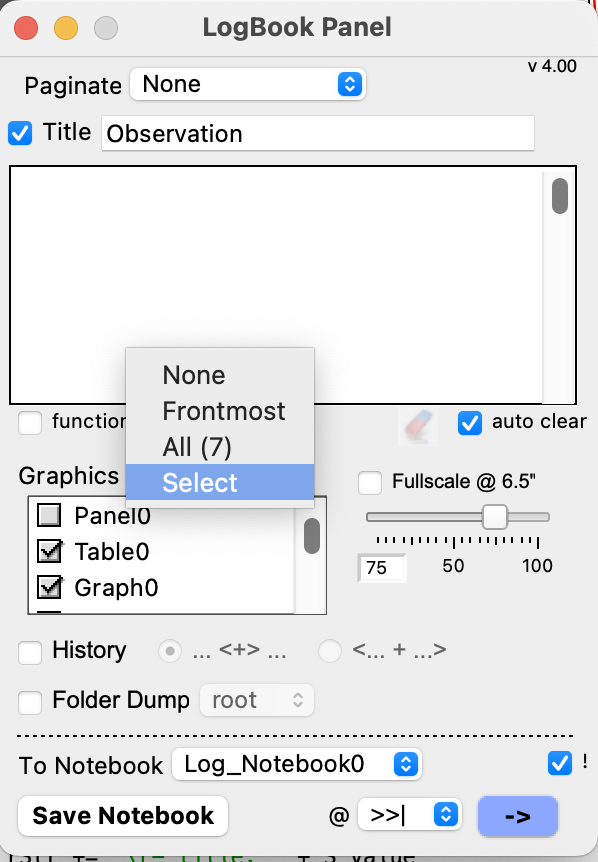
This provides a control panel to input logbook information to a notebook in an efficient and consistent manner.
Features
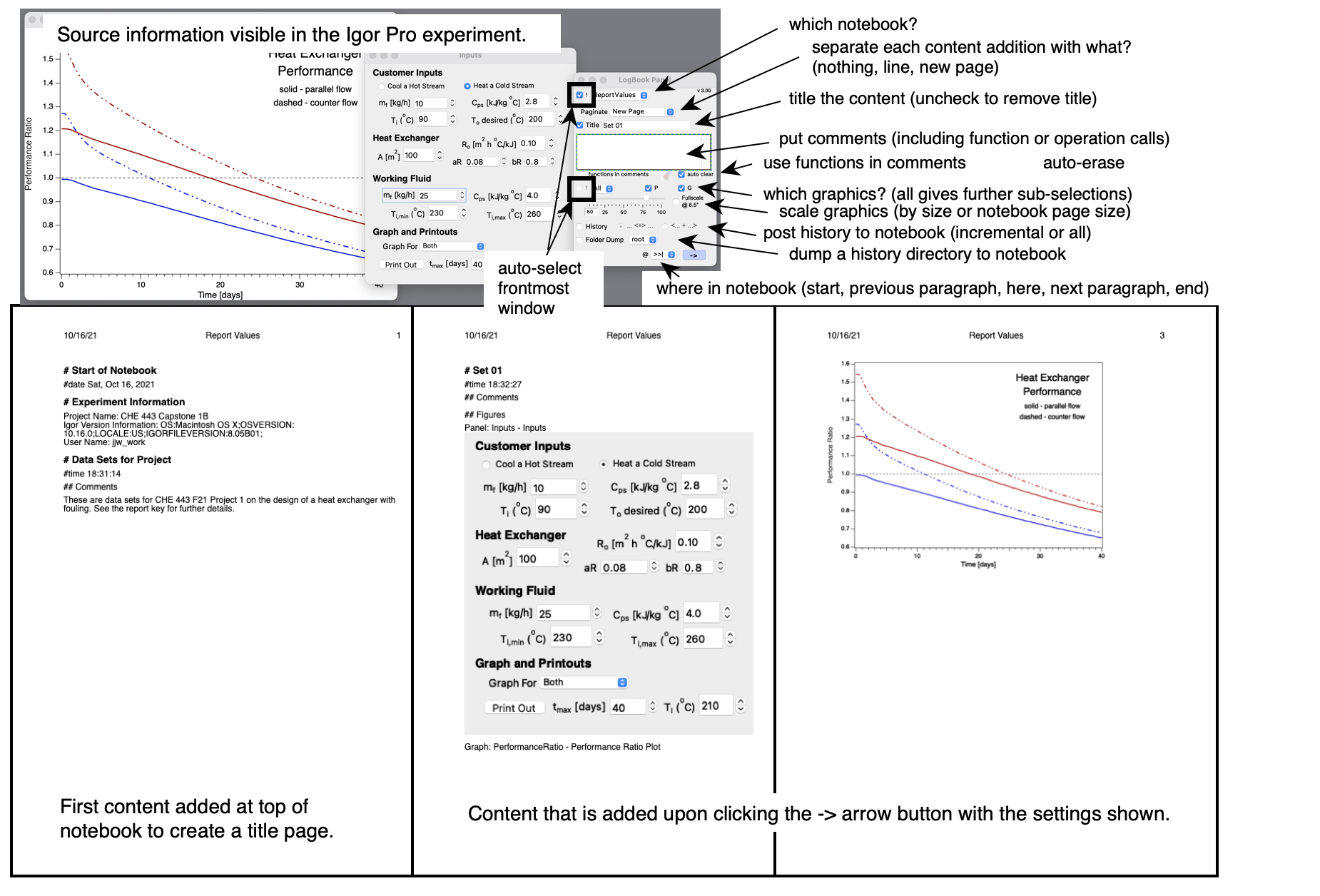
The start of every notebook is stamped with the date and experiment information.
Sections are provided to grab comments, graphics, history, and a folder directory.
The input comments can contain dynamic codes to execute a function or operation call.
- %date() - inserts the date at that point in the notes
- %MyStringList(10) - inserts the string results from MyStringList(10) at that point in the notes
- #print date() - prints the date to the history area
- #MyFunction(10,3,5) - runs my function with the given parameters
- #{MyOperation parameters} - runs my operation with the given parameters
The notebook is saved in markdown format.
The Save Notebook button generates a markdown formatted notebook. An example below shows a saved markdown notebook viewed in Obsidian.
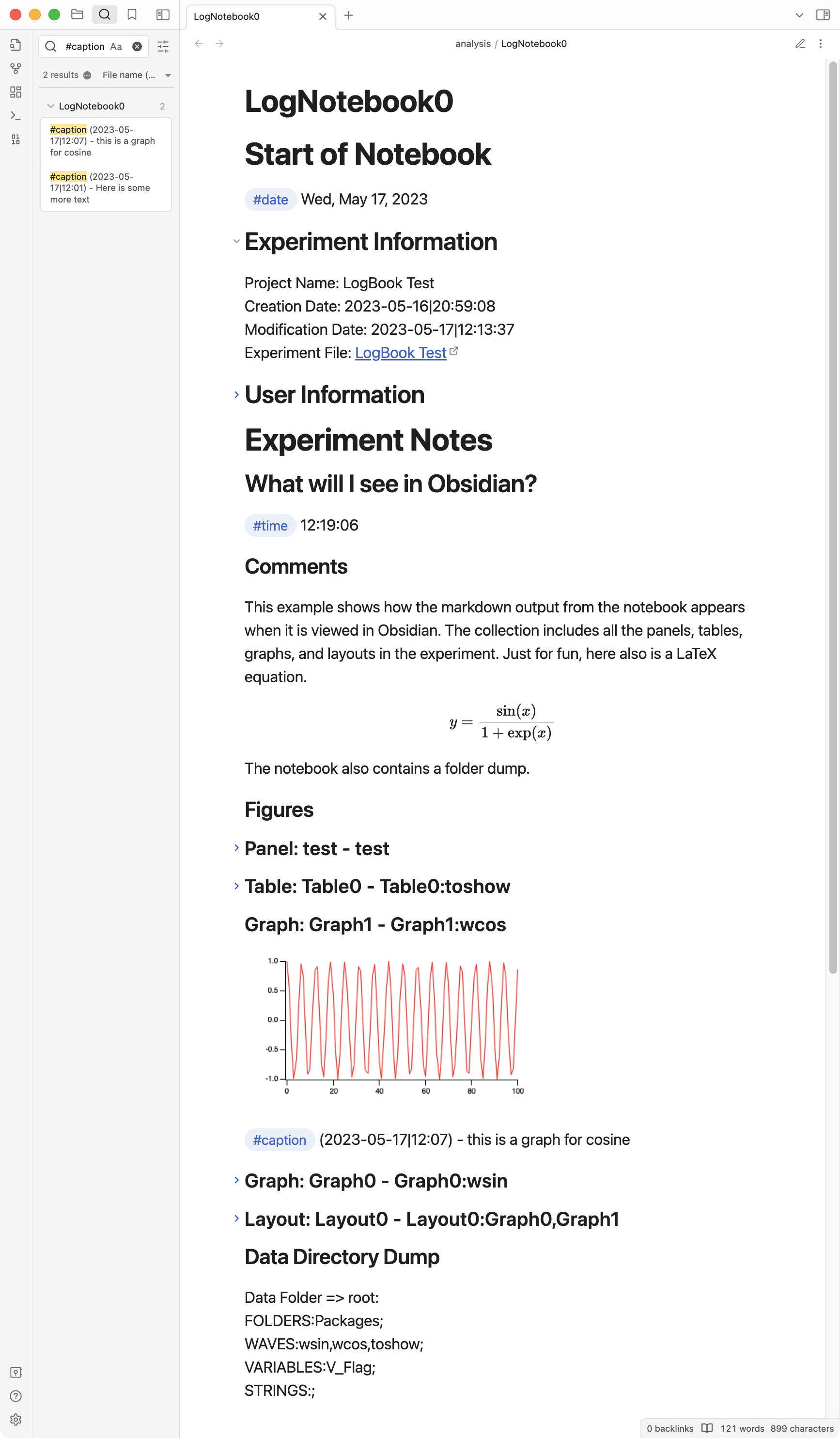
The captions tags are generated using the Windows Notes package.
Distribution Details
- Experiments: none
- Procedure Files: LogBook.ipf
- XOPS: none
- Demos: none
- Requires Packages: NONE*
- Help Files: LogBook.ihf
- Other Documentation: the Web pages for this project
Images:
Project Details
Current Project Release
| Release File: | LogBookv400.zip |
| Version Date: | Wed, 04/24/2024 - 05:30 pm |
| Version Major: | 4 |
| Version Patch Level: | 00 |
| OS Compatibility: | Windows Mac-Intel |
| Release Notes: |
Bug Fixes
Code Improvements
UI Changes
New Features
Updating to this version should give a message in the history window when an experiment is opened that was using a previous version. |

Forum

Support

Gallery
Igor Pro 9
Learn More
Igor XOP Toolkit
Learn More
Igor NIDAQ Tools MX
Learn More